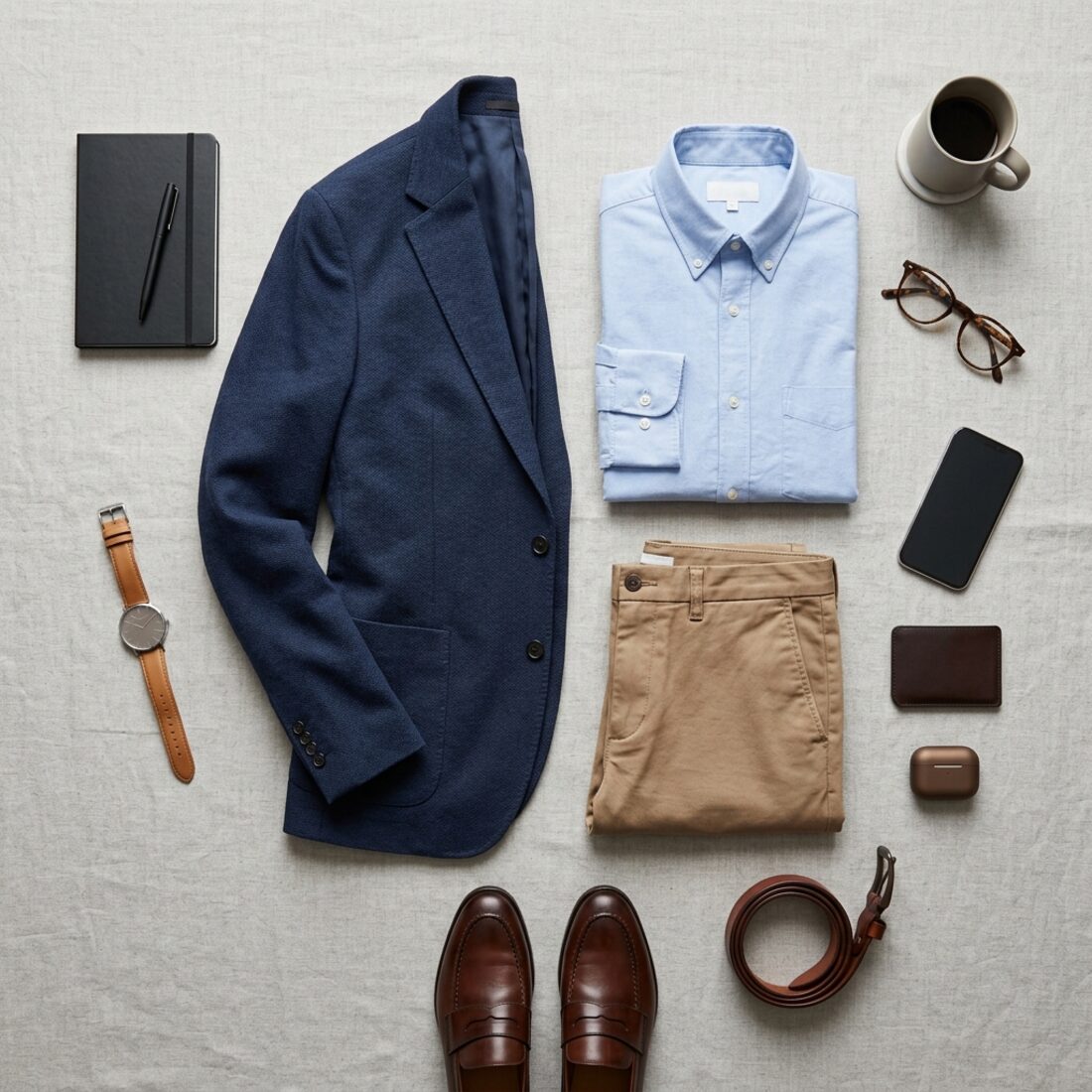
Most men either skip accessories entirely or wear too many at once. The fix isn't a shopping list — it's understanding which two or three pieces actually change how an outfit reads, and wearing those well.
The watch: pick one that goes with everything, not everything you own
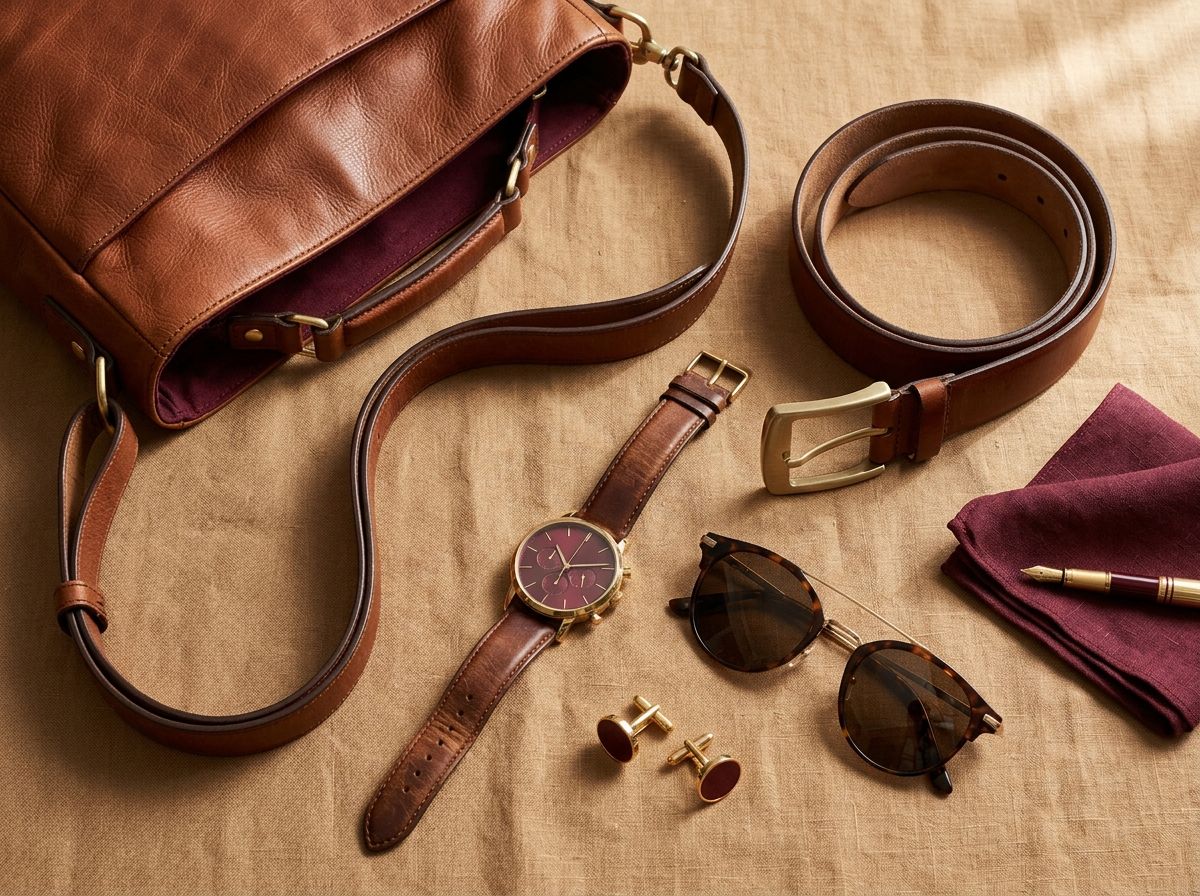
A single watch with a leather or metal strap in a neutral tone will outlast a dozen trend pieces. Before buying a second one, ask whether it solves a problem the first doesn't — most men only need one.
Match your belt to your shoes, not your mood
This is the one rule that instantly looks intentional: brown belt with brown shoes, black with black. Keep one of each in a plain leather finish and you've covered almost every outfit you own.
The bag people forget: a good crossbody or messenger bag
A structured leather crossbody bag does more for an outfit than a backpack, and it's practical enough to actually use daily — for a laptop, wallet, and the things a jacket pocket can't hold.
Sunglasses that suit your face, not the trend cycle
Round faces generally suit angular frames, and angular faces suit rounder ones. Buy based on that, not on what's trending this season — sunglasses are worn for years, not seasons.
Small details: cufflinks and pocket squares
These only belong in formal or semi-formal settings — a wedding, a client dinner, an interview. Outside of that context they read as overdressed, so save them for when the outfit actually calls for them.
The one-accessory rule for beginners
If you're unsure how much is too much, wear one accessory beyond your watch and stop there. A belt and a bag is plenty for most days — you don't need to activate every accessory you own at once.
Final thought
Accessories should solve a problem or add one deliberate detail — not compete with each other. Fewer, better pieces, worn consistently, will always look more put-together than a rotation of everything you own.