Working from home removed the daily "dress for the office" pressure — but showing up in yesterday's sweatshirt every day quietly affects how you feel, too. Here's a middle ground that works.
The "top half" strategy
If video calls are your main visibility, invest slightly more in what shows on camera — a good shirt or knit top — while keeping bottoms comfortable. It's practical, not fake.
Comfortable doesn't mean sloppy
Soft, well-fitted trousers or joggers in a clean, simple cut look intentional. Baggy, worn-out sweatpants read as "just rolled out of bed," even if that's technically what happened.
Getting dressed still matters psychologically
Changing out of sleepwear — even into casual clothes — creates a mental shift that helps separate "home mode" from "work mode," which matters more for focus than most people expect.
Build a small home-office capsule
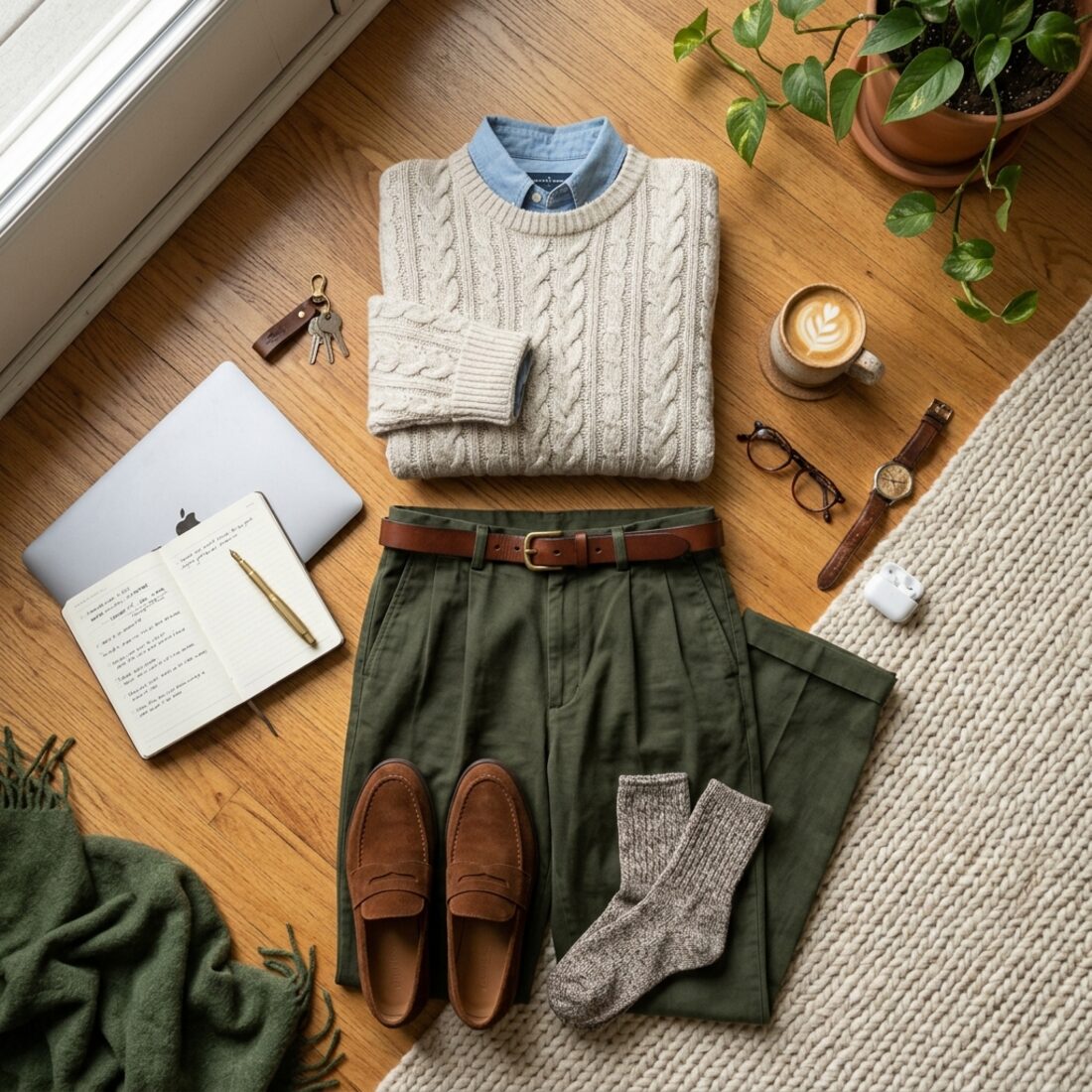
- 2-3 comfortable but structured tops for calls
- 2 pairs of soft, well-fitted trousers or joggers
- 1 cardigan or zip-up for temperature control
- Slippers or soft shoes — but still real shoes, not bare feet, if it helps you feel "on"
Lighting matters as much as the outfit
A great outfit in bad lighting still looks washed out on camera. Face a window or light source for calls — it does more for how "put together" you look than the shirt itself.
Final thought
You don't need office wear at home, but a small, intentional wardrobe that makes you feel capable — even in comfortable clothes — pays off in how you show up to the day.