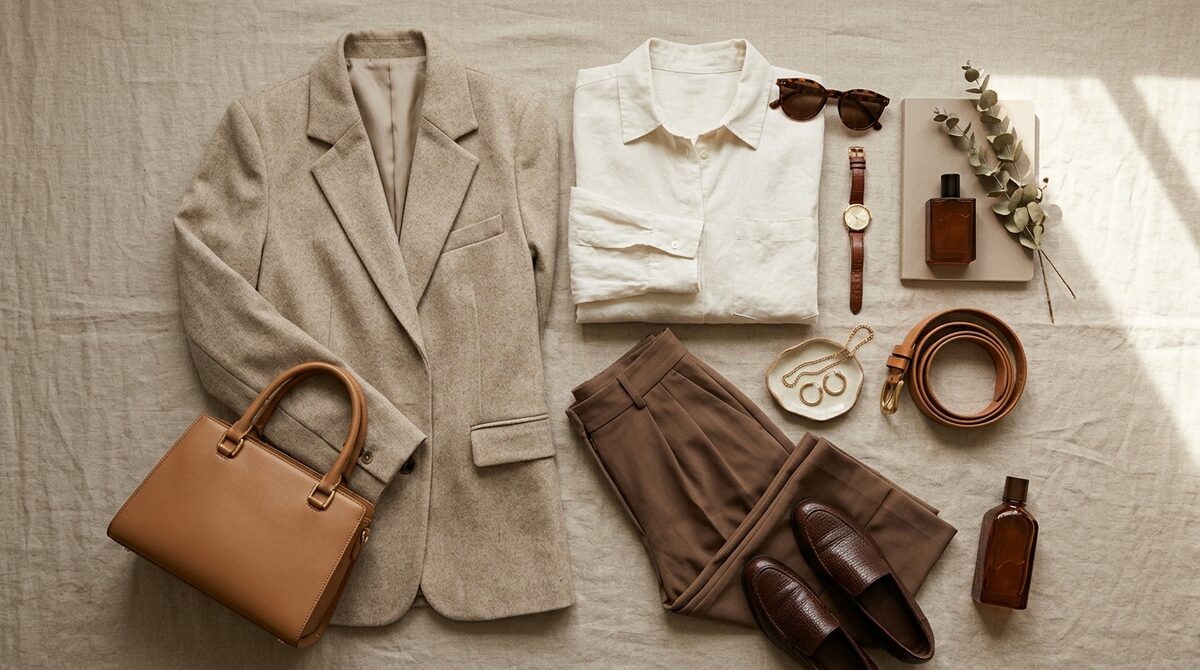
Sustainable fashion doesn't have to mean an expensive overhaul of your entire wardrobe. Small, practical shifts in how you buy and care for clothes make a bigger difference than most people expect.
Buy less, choose better
The most sustainable item is often the one you already own. Before buying something new, check if a similar piece already exists in your closet — you might be surprised how much overlap there is.
Learn to read fabric labels
Natural fibers like cotton, wool, and linen generally last longer and break down more easily than synthetic blends. Checking the label before buying takes ten seconds and tells you a lot about how long a piece will hold up.
Cost-per-wear beats sticker price
A $150 coat you wear 100 times costs $1.50 per wear. A $30 top worn twice before it falls apart costs $15 per wear. Thinking in cost-per-wear reframes what "expensive" actually means.
Repair before replacing
A loose button, a small tear, or a stretched-out hem are usually fixable in minutes with basic sewing skills — or a quick trip to a local tailor. Most people throw away clothes that could easily be repaired.
Secondhand isn't a downgrade
Thrifted and secondhand pieces — especially outerwear, denim, and accessories — are often better made than fast-fashion equivalents, simply because they were built to last through a previous owner already.
Wash less, wash smarter
Over-washing is one of the biggest causes of premature wear. Spot-cleaning, airing out garments, and washing on cooler settings all extend a piece's lifespan significantly.
Donate and resell thoughtfully
When you do let go of clothes, donating or reselling keeps them in circulation longer instead of going straight to landfill — and often puts a little money back in your pocket.
Final thought
Sustainable fashion isn't about perfection — it's about making slightly better choices consistently. Buying fewer, better pieces and taking care of what you own goes further than any single "eco" purchase.