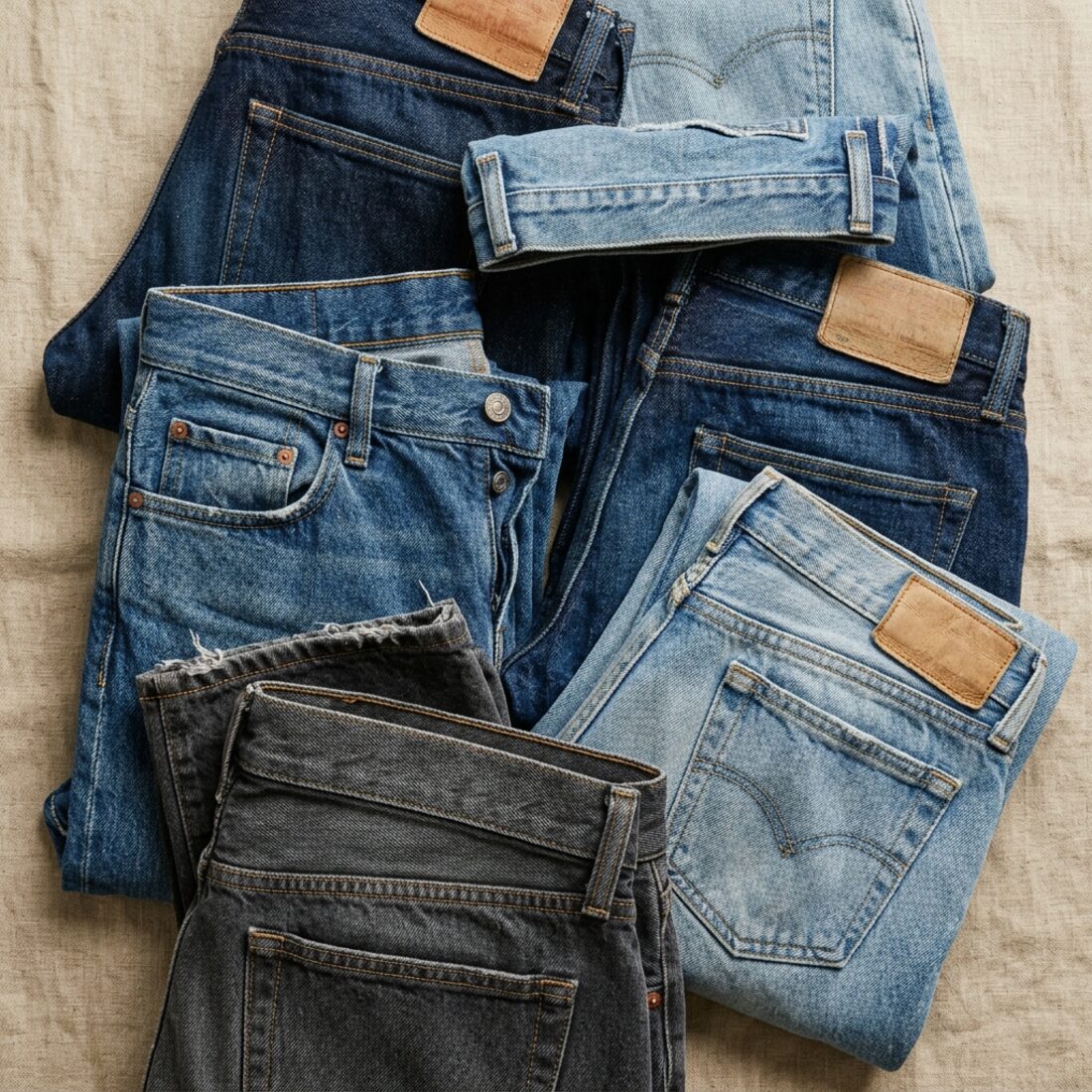
Jeans are probably the most-worn item in most wardrobes, yet also the most commonly badly fitted. Here's how to actually get it right.
Know your fit vocabulary
Skinny, slim, straight, relaxed, and wide-leg all describe how the fabric sits from hip to ankle. None is inherently "better" — the right fit depends on your build and what you're pairing the jeans with.
Rise matters more than most people think
Low, mid, and high-rise refer to where the waistband sits. High-rise tends to elongate the legs; low-rise shifts more visual weight to the hips. This single detail changes how an entire outfit looks.
Raw vs. washed denim
Raw denim hasn't been pre-washed and will fade uniquely to your body over time, but requires a break-in period. Washed denim is softer and ready to wear immediately — better for most people's daily rotation.
Check the fabric weight
Heavier denim (12oz+) holds its shape better and lasts longer but is less breathable. Lighter denim is more comfortable in warm climates but wears out faster. Check the label if you can.
The sit-and-stretch test
Before buying, sit down, squat slightly, and reach up in the fitting room. Jeans that fit standing but restrict movement sitting will be uncomfortable within an hour of wear.
Getting them tailored is normal
Most people need a hem adjustment at minimum. A $10-15 tailoring cost turns an "almost right" pair into ones that actually look intentional.
Final thought
Good jeans aren't about the brand name — they're about rise, fit through the leg, and fabric weight matching your climate and lifestyle. Get those right and everything else follows.