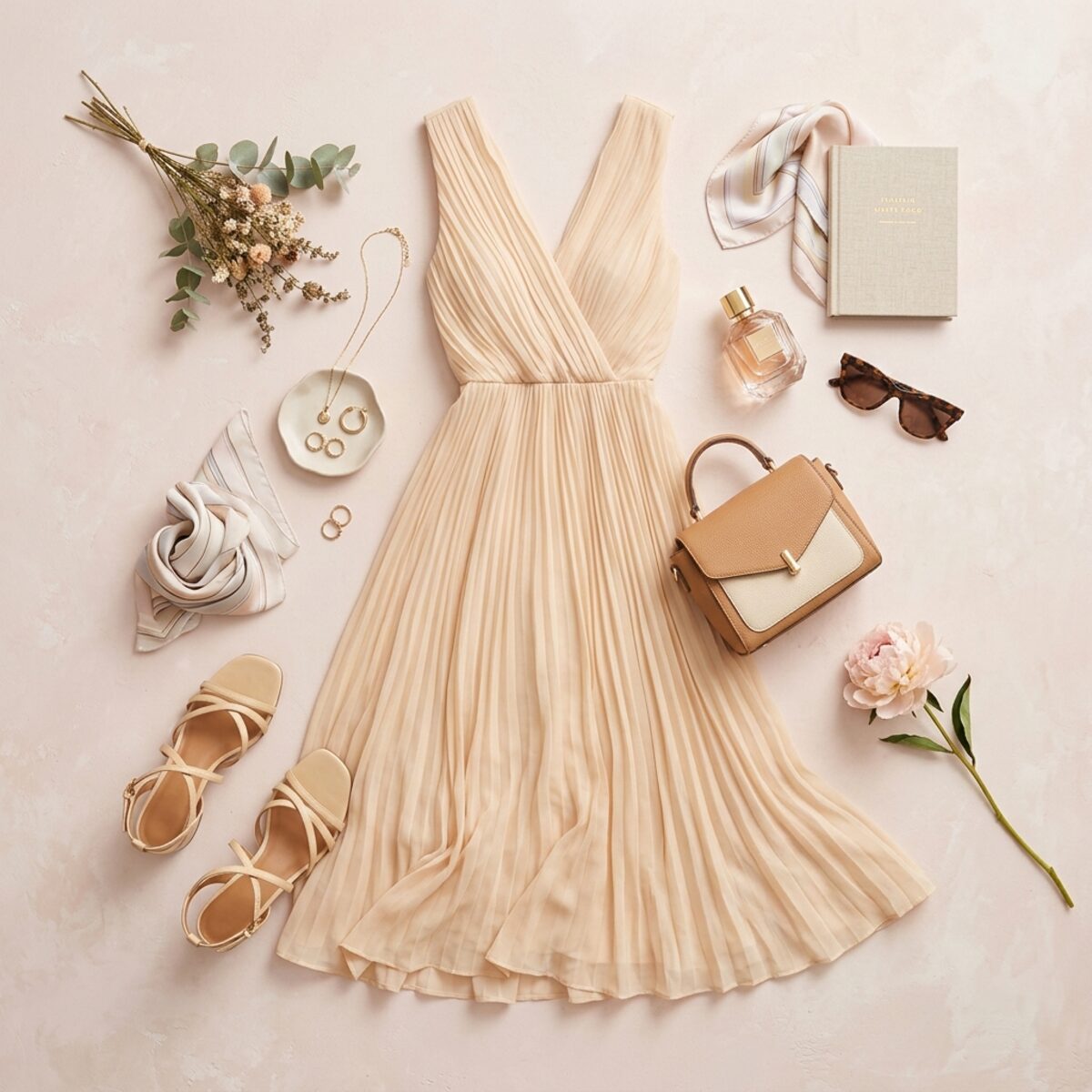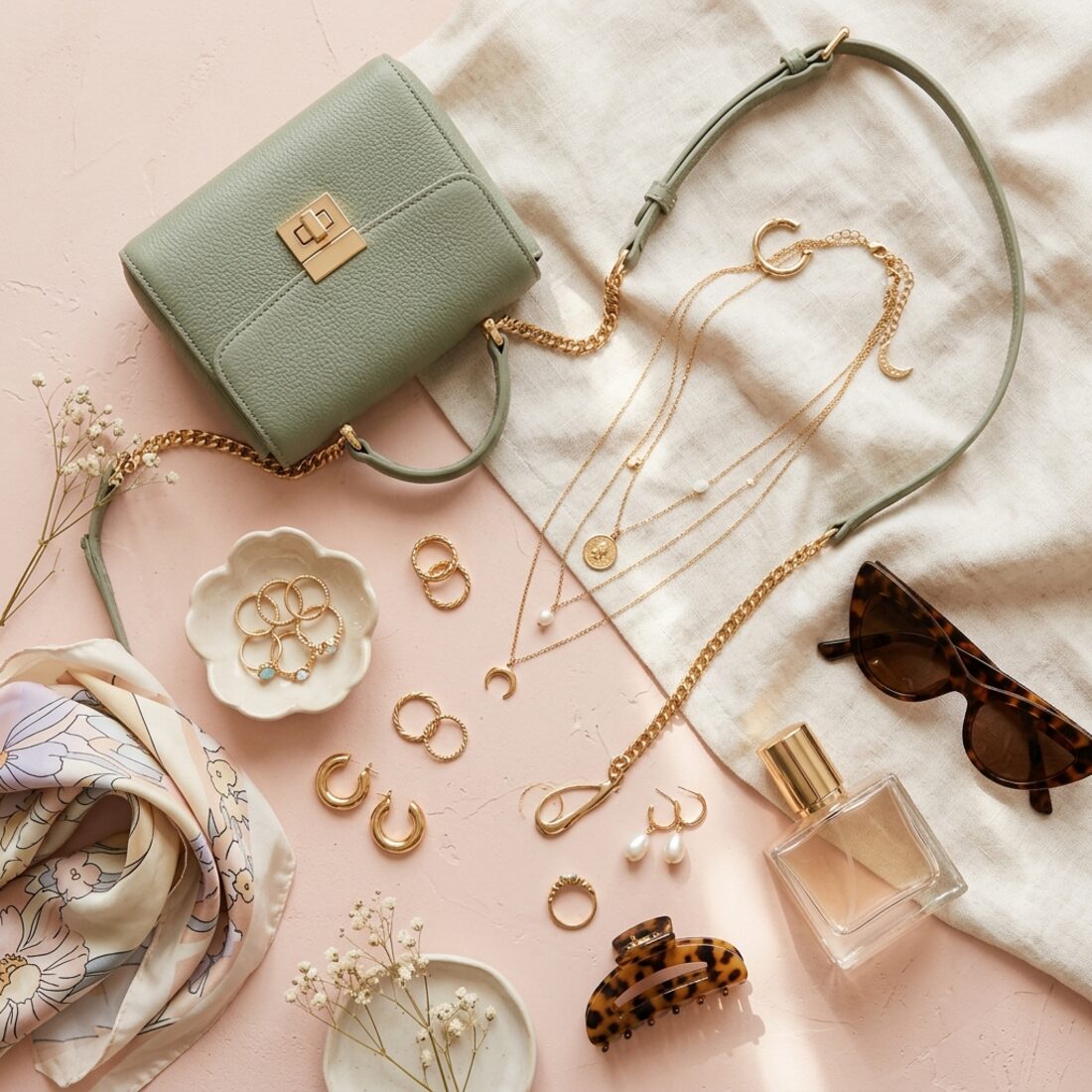
Accessories are the fastest way to change how an outfit feels without buying anything new to wear underneath. Here's how to use them well — without overdoing it.
Start with one focal point
Instead of piling on multiple accessories, choose one that will draw attention — a statement necklace, a bold bag, or an interesting belt — and let the rest of the outfit support it.
Match metals (most of the time)
Keeping jewelry metals consistent (all gold or all silver) creates a more polished look. Mixing metals can work, but it looks intentional only when done sparingly and deliberately.
Bags are function and statement
A well-chosen bag does double duty — it needs to work for your day (fitting your essentials) while also complementing your outfit's color palette or level of formality.
Scarves aren't just for cold weather
A lightweight scarf can add color, texture, and structure to an outfit even in warmer months — tied at the neck, looped through a bag handle, or worn as a headscarf.
Belts define, not just hold up
Even when trousers don't need a belt functionally, adding one can define the waist and break up an outfit visually — particularly useful with looser silhouettes.
Watches and small details matter more than you think
Small details — a watch, cufflinks, a pocket square — are often what separates a "fine" outfit from one that looks deliberately put together, because they show attention to detail.
The rule of removing one thing
Before leaving the house, look in the mirror and consider removing one accessory. If the outfit still looks complete, you were probably one step past "elevated" and into "overdone."
Final thought
Good accessorizing is about restraint and intention, not quantity. A single well-chosen piece will almost always do more for an outfit than five competing ones.